NC-IUPHAR newsletter Summer 2014

The latest edition of our newsletter can be read at the link below:

NC-IUPHAR_Newsletter_Summer_2014

Special features covered in this issue include:

  • A detailed profile of the PubChem database contributed by their lead scientist Evan Bolton, with whom we have worked in consultation with as we move forward with our ligand curation;
  • “Out-and-about with the database team” – a summary of conferences and meetings attended by the team so far this year;
  • Spotlight feature on our curation of approved drugs;
  • “Pharmacology of human proteases”, contributed by Tony Turner, chair of the NC-IUPHAR committee for proteases and hydrolases;
  • A tribute to NC-IUPHAR Vice Chair and Database Chair Prof. Tony Harmar, who sadly passed away earlier this year.

Regular features include:

  • A message from NC-IUPHAR chairman Michael Spedding;
  • An update from the database team on our work on the IUPHAR/BPS Guide to PHARMACOLOGY;
  • ‘Student experiences’, this time with a piece contributed by our 2013 summer student Katerina Gospodinova;
  • A report of our April 2014 NC-IUPHAR meeting

The newsletter is also available via our website and we have also created an archive of previous issues which can be viewed here.

Posted in Uncategorized

WCP2014: Abstracts from NC-IUPHAR members

The 17th World Congress of Basic and Clinical Pharmacology (WCP2014) is now rapidly approaching and several NC-IUPHAR members will be attending the Congress. The followings talks will be presented on Tuesday 15th July 2014 15.30-17.00 in Track 6 of the programme: NC-IUPHAR and the IUPHAR/BPS Guide to PHARMACOLOGY.

From Sir Colin Dollery, Clinical Translational Pharmacology group:

NC-IUPHAR 1987-2014 and beyond

At the Sydney, Australia IUPHAR Congress in 1987, when I became President of IUPHAR, the Executive Committee decided to establish NC-IUPHAR, a committee on receptor nomenclature. At this time there was very little structural knowledge of receptors but a standardised nomenclature system was badly needed. The rapid ascent of NC-IUPHAR owed much to its first chair, Paul Vanhoutte’s energy, persuasive talents, and infectious enthusiasm. It was clear that a critical convergence was taking place between experimental and molecular pharmacology with a need to standardise nomenclature and provide an authoritative review of the evidence published on the properties of these molecules and the substances that interacted with them. A critical decision was to form over 60 expert committees with world wide membership to ensure a high quality of review. Since then there has been an exponential growth in activity, following the sequencing of the whole genome. Successive chairs, Bob Ruffolo and Michael Spedding, have contributing greatly to sustaining the quality and momentum of NC-IUPHAR as have those who have maintained the database. The volume and complexity of the data available continues to expand and the scope of the NC-IUPHAR-DB has expanded with it. Initially focused on GPCRs it has expanded to include ion channels, nuclear receptors, homo and heterodimers and current work on the kinome. NC-IUPHAR has an h-index of >60 and has a freely available database on receptors which will be described fully in this symposium. As the volume of BIG Data explodes the need for critical curation to maintain high standards of accuracy in documentation of targets and ligands in pharmacology and clinical pharmacology will grow too.

From Michael Spedding, NC-IUPHAR chairperson:

How two decades of NC-IUPHAR have helped resolve controversy in drug discovery

NC-IUPHAR (the nomenclature committee of IUPHAR) is engaged in a major task: How can we define all the main receptor and drug targets coded by the human genome, and put them in a database (guidetopharmacology.org) freely accessible to all? Even more important, link them to therapeutics and pharmacological target validation? The immense recent growth of knowledge about drug targets, with their crystal structures, has been a huge help to drug discovery and while IUPHAR classifications are regularly used, we are able to be proactive including targets, and contacting experts. We have 80 subcomittees of >700 pharmacologists contributing in their relevant fields, organised by our 5 curators, who are financed by the IUPHAR, the Wellcome trust, the BPS and our industrial sponsors. We have 2500 proteins in the database, with >6000 ligands, ~600 approved drugs. With the vast increase in knowledge, why is drug discovery not more successful? Perhaps because the increase in knowledge has been matched by the increase in variables affecting drug-receptor interactions. This is why we try and include data on how the new ‘knowledge frontiers’ of alternative spicing, non-coding RNAs, epigenetics, allostery, and biased signalling may affect drug discovery and development. An example : Doriano Fabbro, with Elena Faccenda as curator, has produced a complete database of kinases – with their pharmacology, thanks also to Novartis, Discoverx, Millipore and Reaction Biology providing data. This is an expert-based system, based on validated data, freely available to all, in our publications or on http://www.guidetopharmacology.org. However, these variables also lead to controversy and disagreement, sometimes fierce, between experts. NC-IUPHAR is the arbiter, and sometimes the target, of occasionally vivid controversy. Some examples will be given! But this means that we are relevant. NC-IUPHAR is open to all pharmacologists!

From Adam Pawson, Senior Database Curator:

IUPHAR-DB, GRAC and the IUPHAR/BPS Guide to PHARMACOLOGY

The International Union of Basic and Clinical Pharmacology/British Pharmacological Society (IUPHAR/BPS) Guide to PHARMACOLOGY (http://www.guidetopharmacology.org) is a new open access resource providing pharmacological, chemical, genetic, functional and pathophysiological data on the targets of approved and experimental drugs. Created under the auspices of the IUPHAR and the BPS, the portal provides concise, peer-reviewed overviews of the key properties of a wide range of established and potential drug targets, with in-depth information for a subset of important targets. The resource is the result of curation and integration of data from two well-established resources: (1) the IUPHAR Database [IUPHAR-DB; the original database of the IUPHAR Committee on Receptor Nomenclature and Drug Classification (NC-IUPHAR) and driving force behind the development of the Guide to PHARMACOLOGY] and; (2) the published BPS ‘Guide to Receptors and Channels’ (GRAC) compendium. The data are derived from a global network of expert contributors, and the information is extensively linked to relevant databases, including ChEMBL, DrugBank, Ensembl, PubChem, UniProt and PubMed. Each of the ∼6000 small molecule and peptide ligands is annotated with manually curated 2D chemical structures or amino acid sequences, nomenclature and database links. Future expansion of the resource will complete the coverage of all the targets of currently approved drugs and future candidate targets, alongside educational resources to guide scientists and students in pharmacological principles and techniques. GRAC has now been superseded by ‘The Concise Guide to PHARMACOLOGY’, a biennial snapshot of the overviews of the key properties of each target family, intended to be a quick desktop reference guide.

From Chris Southan,  Database Curator and Chairperson of the NC-IUPHAR Drugs and Targets Annotation Subcommittee

Analysing the drug targets in the human genome

Discerning the molecular mechanisms of action (mmoa) for drugs treating human diseases is crucially important. This talk will provide an overview of target numbers in IUPHAR/BPS Guide to PHARMACOLOGY, compare these to other sources and consider the wider implications for drug discovery. We have developed stringent mapping criteria for primary targets (i.e. identifying those direct protein interactions mechanistically causative for therapeutic efficacy). This includes inter-source corroboration by intersecting multiple drug sources inside PubChem to produce consensus structure sets. The analogous approach is used to intersect published target lists and database subsets at the UniProtKB/Swiss-Prot identity level. Our cumulative curation results reveal that structure representation differences, data provenance and variability of assay results, are major issues for experimental pharmacology and global database quality. While our activity mappings encompass some polypharmacology (e.g. dual inhibitors and kinase panel screens) our strategic choice is to annotate minimal rather than maximal target sets. The consequent increased precision gives our database high utility for data mining, linking and cross-referencing. Our small-molecule figures are currently converging to ~200 human protein primary targets for ~1000 consensus chemical structures of approved drugs. Target lists from other sources are typically larger and show a degree of discordance. Comparative analysis of these lists by their UniProt ID content and Gene Ontology distributions suggests differences in curatorial selection are the main cause of divergence. The global target landscape thus shows paradoxical trends. On the one hand, cumulative drug research output and recent expansions (e.g. epigenetic targets and orphan diseases) have pushed bioactive compounds from papers or patents to above 2 million and chemically modulatable human proteins above 1500 (PMID:24204758). On the other hand, reports of Phase II clinical efficacy failure, with implicit target de-validation, are frequent. In addition, our assessment of drug approval data from 2009 to 2013 indicates new targets (i.e. first-in-class mmoas) are so low as to threaten the sustainability of the pharmaceutical industry. Causes and consequences of these paradoxes, along with utilities for minimal and maximal druggable genomes, will be discussed.

From Simon Maxwell, Educational Site Project Leader

The IUPHAR/ASPET Pharmacology Education Project

Pharmacology has been the science at the heart of many of the advances in healthcare that we now take for granted. Those advances have depended on expertise in all areas from basic pharmacology through translational research to prescribing and monitoring the use of medicines by patients. Each step has required individuals with a clear grasp of the fundamental principles of pharmacology and clinical pharmacology supported by knowledge of the actions of specific drugs. For many scientists, and in many academic institutions, there has been an erosion of the visibility and profile of the pharmacological sciences as we move progressively into an era of inter-disciplinarity. The IUPHAR/ASPET Pharmacology Education Project seeks to bridge this gap and promote learning in pharmacology to a worldwide audience. The specific aims of the project are to: (i) produce a simple, attractive easily searchable resource that will support students of the pharmacological and other biomedical sciences, as well as health professions students including medicine, nursing, pharmacy and others; (ii) make high quality resources available to support pharmacology educators; and (iii) service the needs of students and teachers in resource-poor countries or where pharmacology is less well developed. The project has been supported for the first two years by a generous grant from ASPET and will be led by an international Editorial Board bringing together individuals with demonstrable commitment to pharmacology education. That group will welcome the input of colleagues from around the world as it brings together links to existing resources and gradually creates new ones. The content will be divided broadly into four sections: pharmacology, clinical pharmacology, drugs and therapeutics. Each section will be divided into modules, which will have associated topics to which learning resources will be attached (e.g. web-links, articles, video and audio files, PowerPoint). The longer-term aspiration would be that each topic would have an associated summary text generated by the editors. In addition to this simple structure there might be additional content including a formulary, glossary, and discussion board.

Additionally, Chris will be presenting a poster entitled ‘Will the real drugs please stand up? with the following abstract:

BACKGROUND: A comparison of database subsets of approved drugs in 2009 recorded only 807 exact structures in-common (PMID:20298516).  Factors contributing to low overlap included semantic naming inconsistencies, ambiguity in structure representation and the fact that neither regulatory bodies nor pharmaceutical companies directly verify public electronic chemical database records.  This work is a current comparison of drug sources inside PubChem.

METHODS: We selected submitters that nominally included small-molecule drug collections and International Non-proprietary names (INNs) and/or US approved names (USANS).  Unions, intersects and differences were derived by using the Entrez query history interface to perform Boolean operations on retrieved sets. Additional filters were explored, including salt-stripping by selecting a covalent unit count of 1.

RESULTS: DrugBank 3.0 declares 1,541 small-molecule drugs and the term “approved” returned 1,424 substances (SIDs) in PubChem. These collapse to 1,392 compounds (CIDs), and removal of mixtures reduces to 1,325.  The Therapeutic Target Database (TTD) declares 1,540 approved drugs on their website. The CID overlap with the DrugBank 1,325 was 1,108, and the equivalent figure for ChEMBL_17 was 1,141. The three-way consensus (from the DrugBank starting point) was 1,003.  The term INN retrieves 7,916 CIDS, reducing to 7,180 single-components. USAN brings back 5,494 of which only 3,204 are single-component (i.e. more salt forms are designated as USANs). Of the 1,108 3-way set, 927 have an INN or USAN. The “same connectivity” query indicates, on average, each of the 927 have nearly 20 canonically-related CIDs. Issues associated with these metrics will be outlined and, depending on new source releases, the numbers will be updated.

CONCLUSIONS: A surprising degree of non-overlap persists in drug structures. Our results are not a criticism of the valuable sources but further analysis is needed of the multiplicity of structural representations and fuzzy naming of essentially the same canonical drugs inside PubChem. This important issue in cheminformatics extends beyond the INNs to all pharmacologically active structures. It also rationalises our IUPHAR/BPS Guide to PHARMACOLOGY strategic choice of focusing on consensus sets for curation. This work indicates definitive drug lists will remain elusive until there is more collective engagement for provenance, standardisation and cross-mapping.

This poster (no.529) will be displayed on Monday 14th and Tuesday 15th July but is also available to view on SlideShare.

Posted in Events

Case studies in chemical curation III: complexes and component mixtures

The issue of specified mixtures that include pharmacologically active chemical structures is complex and curatorially challenging, as described by this presentation on the topic.

This post will briefly cover our handing of salts. A substance in an approved drug preparation may not only be specified as a salt in national regulatory documentation but also in the physical  molecular form within the tablet itself.  A well known example is atorvastatin calcium (or more strictly, from the FDA insert label, hemi-calcium trihydrate, CID 656846). For many reasons (primarily our MMOA and activity-mapping focus) we have opted for the stringency of representing “parents” (i.e. not salts)  as primary ligands, as can be seen in our ligand entry.

Database metrics can be used to illustrate the complexities in drug data sets and also supports our approach to simplifying the relationship mappings.  PubChem (June 2014) contains 8072 CIDs with an INN and 5636 with a USAN (the caveat is these tags are from secondary sources, not the authorities themselves).  Of these, INN are 91% singleton “parents”  but only 58% for USANs.  While the pharmaceutical importance of salt forms is clear, to enhance the clarity of our ligand entries we usually align them to the parent INN structures. However, we may include links to pharmacologically-relevant salt forms. If you want to see all mixtures (salts and/or combinations) associated with a ligand you can click on the “Related substances, Mixture” tag in the PubChem CID (the caveat is that for well established drugs these can be large “overkill” lists from patent-only specified salts or mixtures).

One of the issues we face for in vitro activity mapping is that bioassay data is often split between database records of not only parents but also different salt forms specified in different extractions of experimental descriptions.  We make our judgments based on inspecting the original papers but where active compounds are extensively diluted into assay buffers, our inter-publication normalisation to parent is a justifiable simplification.  Those wishing to perform similar experiments would obviously need to check the reference, for example which salt a commercial reagent source may have specified (but sometimes not).

Contributed by Chris Southan and Helen Benson

Posted in Chemical curation

Guide to PHARMACOLOGY out and about: Spring 2014 conferences and meetings

In April one of our curators, Helen Benson, represented the team at the Seventh International Biocuration Conference at the University of Toronto, and presented a poster outlining our approved drug and clinical target curation. This visit followed the previous year’s meeting of the International Society for Biocuration in Cambridge, UK, attended by both Helen and database developer Joanna Sharman.

Over the 4 days of the conference, the programme of talks and workshops covered many themes relevant to our work, as well as discussing the challenges facing biocurators today. These challenges include how curatorial work will evolve in an age of big data, and the role of crowdsourcing and text mining in managing the volume of biological data to be included in online databases. Keynote speakers Suzanna Lewis and Lincoln Stein discussed these themes with their respective talks on optimisation of curation and whether Big Data will crush curation.

One of the main themes from the talks and the workshops was the role and implementation of clinical and anatomical ontologies to databases. Additionally, several talks discussed data standards and controlled vocabularies, with particular regard to pathway curation. This issue is particularly pertinent to us as we now include enzyme pathways in our database.

Our team of curators has now expanded to 4, and our pipeline for ligand and target curation is constantly evolving to achieve optimum methods. It was therefore invaluable for us to learn more about the projects of other research groups, and to hear about which areas have become key focus points for the field. As always, it was a pleasure to meet others working in the field and we look forward to attending this event in the future.

Our database developer, Joanna Sharman, attended Edinburgh Neuroscience Day, an annual day of talks and poster presentations involving over 300 researchers with an interest in neuroscience.

Joanna also attended and presented a poster at the Barcelona GPCR Spring Conference organised by the GLISTEN network. This included presenting and discussing proposals for collaborations at the GPCRDB Satellite Meeting.

Joanna was also invited to attend a workshop on Computational Challenges in Data Citation at the University of Pennsylvania, Philadelphia, which brought together three groups of people (Computer Scientists, Information Scientists and Data Scientists) to explore the technical challenges and research opportunities posed by the increasing demand to generate citations for large, complex datasets.

Chemical curator Chris Southan started his 2014 representations with an invited visit to the April 29th – May 1st BioIT World, Boston, as co-organiser and presenter at a Workshop entitled “A Bar Code for Chemical Structures:Using the InChI to Transform Connectivity between Chemistry, Biology, Biomedicine and Drug Discovery”.

His individual workshop presentation was entitled “Transformative Utility of InChIKey Searching in the Mother of all Databases”.

A poster related to the database was also presented on “Will the real drugs please stand up?”.

In May 6th Chris had the privilege of being one of the opponents in a (successful) PhD examination for The Faculty of Pharmaceutical Sciences, University of Copenhagen. The trip included a presentation to the department and the GPCRDB team entitled “Will the real drugs and targets please stand up ? Evolving consensus-based curatorial strategies”.

On June 1-5th Chris attended the 10th International Conference on Chemical Structures. His oral presentation was entitled “Will the real drug targets please stand up?”.

As an alumnus from his work on the ELIXIR project in 2008/9 Chris attended the June 12th EMBL-EBI 20th Anniversary celebrations. He also took the opportunity to visit the EBI and Cambridge on the next day for discussions with a range of collaborators including UniProt, MEROPS, ChEMBL and NextMove Software.

Database Principal Investigator Jamie Davies attended the SULSA Synthetic Biology Meeting, in Edinburgh on 10th June and presented our poster “Exploiting Edinburgh’s Guide to PHARMACOLOGY database as a source of protein design information for synthetic biology”.

Posted in Events

New features on the Guide to PHARMACOLOGY: June 2014

Our latest database update took place on Monday 16th June and this post summarises the new content and features on the site.

Website demo

Our ‘Help’ pages now include a ‘walkthrough’ demo of the website produced by Prof. Tony Harmar prior to his retirement. This resource complements the tutorial already available via our ‘Resources’ menu and we especially hope our new users will find it valuable for getting to grips with the site.

Target updates

Our enzyme target class has been updated to include additional chromatin-modifying enzymes from several recent review articles, while our ‘other proteins targets’ class now includes bromodomain-containing proteins, also curated from recent reviews. Many of these target pages have also now been updated to include interaction data for the ligands which modify these targets. For the GPCR target class, the dopamine D1 and somatostatin sst3 and sst5 receptor pages have been updated.

Ligand updates

We now include a separate tab on our ligand list for labelled ligands. This includes radiolabelled ligands, unstable isotopes, fluorescent tags and small chemical entities.

Each of the tabs on our ligand list is now annotated with our ‘approved drug’ symbol, indicating approved drug ligands within each class.

Following a quality-control check on our ligand entries in consultation with PubChem, many of our ligand pages have been further annotated with CID-crosslinks and contextual comments. Our series of blog posts on chemical curation will discuss some of the interesting case studies we encountered during this exercise.

A summary of the total number of targets and ligand now in the database is available on our ‘About’ page

Posted in Database updates

Case study in chemical curation II: Racemates and how to represent them

Where the drug is a racemate, should we go ‘flat’?

Example: ketoconazole

Many drugs are racemates, as indicated by their INN document or FDA label. This presents us with a curatorial decision: should we represent both of the enantiomers as separate ligand entries, one ligand entry displaying the structure of one of the enantiomers, but representing the racemate, or a flat structure representing the mixture? And what structure should we link out to in PubChem and other resources?

Ketoconazole is a racemate of a 2R, 4S enantiomer and a 2S, 4R one. For this ligand and other racemates we have chosen to display a ‘flat’ structure, not specifying stereochemistry to represent the mixture. This follows a cross-check against PubChem to ensure the flat structure CID is supported by sufficient number of ‘same structure’ matches, and we also check that the references from which we have derived our biological activity data for the compound do not specify that they used a particular enantiomer in their experiments. Once we are sure of a consensus match for the flat structure on PubChem, and that our activity data can be mapped to a non-specific structure, the structure is curated and the corresponding CID added to the ligand entry. In these cases,  we have been sure to add contextual curators’ comments to our ligand entries and links to the CIDs representing the enantiomers. Where possible we try to ensure the links in our database links table also specify the flat structure, but where this is not possible we have indicated this in our comments.

N.B. There are cases where we have activity data for a particular chiral specification and for the racemate and in these instances we create ligand entries to represent both structures. In a subset of these cases, the single enantiomer is also a drug in its own right. For example: cetirizine and (R)-cetirizine. In a limited number of cases we have data for the racemate and both enantiomers and therefore maintain three separate ligand entries cross-linked by comments.

Special cases: active and inactive enantiomers 

Fluvastatin– racemic mixture with a more active enantiomer.

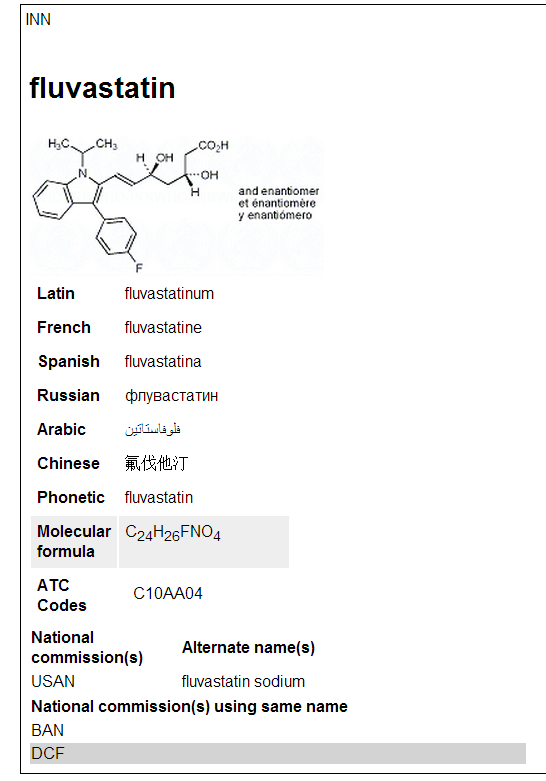
Fluvastatin was added to our database 3 years ago as part of a pilot project on enzyme pathway curation focusing on the lanosterol synthesis pathway. Unlike all the other statin drugs, the preparation of fluvastatin found in the marketed drug/INN-assigned structure is a racemate of two enantiomers: A ‘3R, 5S’ enantiomer (CID 446155), and a ‘3S, 5R’ enantiomer (CID 1548972). The following image is from the INN document for the drug:

Fluvastatin_INN document

(Image from: https://mednet-communities.net/inn/db/ViewINN.aspx?i=6547 , WHO MedNet, Accessed 02/7/14)

However, these two enantiomers do not have equal potency at the target (HMGCR), and it is the 3R, 5S enantiomer that is more active (PMID 16480934). A preparation of the compound with this particular chirality is used experimentally as a ‘standard’ against which new potential inhibitors of the enzyme are compared.

As discussed above, we normally display a ‘flat’ structure to represent racemic drugs. However, for fluvastatin the structure we chose to display represents the more active enantiomer found in the preparation of the approved drug, and we have annotated our ligand entry for fluvastatin with curators’ comments to justify our curatorial decision. PubChem users will note that if you look at the ‘Same, Isotopes’ link for the CID representing our ligand, you will find no less than 15 CIDs. These are permeated by the 2 stereocentres and the E/Z bond. We may write a future blog post to further discuss the complexity of curating representations of fluvastatin, and how this ligand compares to the other statin drugs.

Watch out for the next posts in this series, coming soon.

Contributed by Helen Benson

Posted in Chemical curation

BPS awards JR Vane Medal to Professor Tony Harmar

The British Pharmacological Society today announced the winners of several of their 2014 awards and prizes. Among these awards is the JR Vane Medal which has been awarded posthumously to Professor Tony Harmar. This award reflects the tremendous contribution Tony made to the field over his lifetime as a researcher, founder and chair of the IUPHAR Database (now the IUPHAR/BPS Guide to PHARMACOLOGY), and Professor of Pharmacology at the University of Edinburgh.

The award for BPS Australasian Visitor has been awarded to Professor Anthony Davenport of the University of Cambridge, Vice Chair of NC-IUPHAR and Chair of the Evolving Pharmacology group.

More information and details of the other BPS awards can be found on the Society’s site at this link.

Posted in Uncategorized

Will the real drugs please stand up? Case studies in chemical curation I

Our database now contains over 6500 ligands, spanning 7 chemical classes. An important part of our curation work is to ensure the chemical structures of these ligands are accurate through both careful curation of new ligands and the running of quality control checks on existing ligand structures. In a series of blog posts over the coming weeks we will discuss some case studies from our recent chemical curation work. These case studies were encountered when we worked on a dataset provided by the PubChem team, which involved quality control checks based on cross-referencing between our ligands and their corresponding CID-assigned entries on PubChem. The GtoPdb team are working on adding links to PubChem from all our ligand pages via CIDs therefore we are trying to ensure there is a consensus between the two resources on the structures of our ligands, and that in cases where a compound has been assigned multiple CIDs or is available in different preparations that our choice of curated structures and links, and where relevant supporting comments, reflects this. The topic of this post is discussed in further detail by our team member Chris Southan on his blog and recent poster.

Cross-referencing of lists of INN-assigned compounds between GtoPdb and PubChem revealed there were some mismatches in the specified stereochemistry, and in some cases nomenclature, of the INN-assigned compounds. In other cases, the structures for our ligands agreed with PubChem but the curated CIDs on the ligand pages pointed to PubChem entries with different stereochemistry, or in one instance with a slightly different structure. In order to resolve these differences, we completed cross-checking between our structures, those specified by FDA labels, INN documents and other resources, and the ‘consensus structures’ on PubChem. For readers unfamiliar with the term ‘consensus structure’, this refers to the CID entry on PubChem with the highest number of same structure matches in terms of SIDs for reported bioactivity data. We aim to link to the PubChem entry which has the highest number of same structure matches reported in bioactivity data references. However, in exceptional cases, the consensus structure on PubChem may not match our structure.

Following a review of each of our flagged ligand entries, we made a decision to either add a curators’ comment to our ligand entry explaining any differences between the resources, or where necessary make revisions to the chemical structure, ligand name or PubChem CID links included on the ligand page. This exercise revealed some ambiguities in several chemical structures and posed the challenge of deciding how they are best represented in databases. Some of the issues that arose during the course of this project were already familiar to the team while others were encountered for the first time during this exercise. We are working on devising protocols for our chemical curation methods which some of these case studies will help to define. As usual, we welcome feedback from our users, so please feel free to contact us with any comments you have on the series of posts to follow.

Contributed by Helen Benson

Posted in Chemical curation

New content and features on The Guide to PHARMACOLOGY: our April 2014 update

Last month we updated our site to include the results of our curation efforts since the start of the year. Our main focus of 2014 so far has been curation of approved drugs and clinical targets, and the site has now expanded to include 1000 approved drugs and their ~250 data-supported primary targets. This set represents a minimal set of approved drugs and targets obtained by intersecting and analysing multiple publically available datasets. For those interested in more detailed information on our methods for drug consensus mappings please see this blog post by our team member Chris Southan, and our recent poster on the topic.

The latest release has also seen updates to existing content and new features introduced to the site.

Approved drug and target curation

Our progress since the last update includes:

  • ~300 new approved drugs have been added to the database, including small organics and antibodies. These drugs include all the new FDA approvals of 2013 and 2014, and drugs used in the treatment of Alzheimer’s disease.
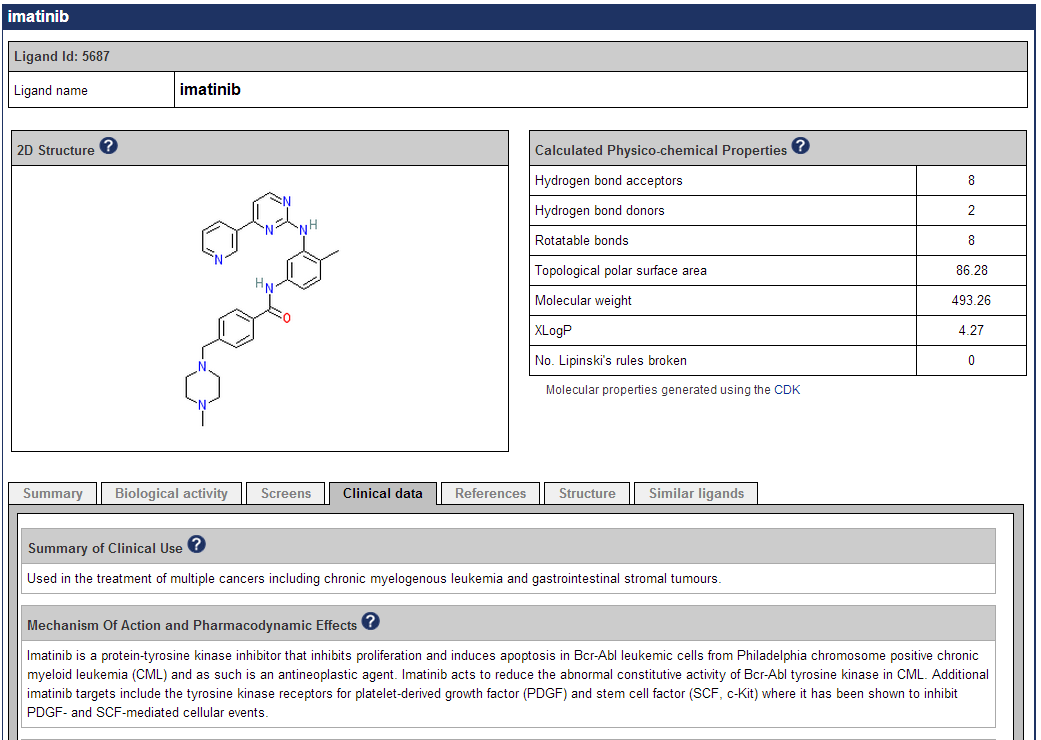
  • Approved drug pages now include approval dates by the FDA/EMA and summaries of clinical use and molecular mechanisms of action (see below).
  • The data-supported primary targets of drugs are indicated with a new symbol ; IC50s and Kis for human targets (or where not available, other mammalian species) have been curated from the literature.
  • New targets include chromatin modifying enzymes, bromodomain-containing proteins, ribosomal factors and kelch-like proteins.
  • Pathophysiological phenotype information and links to OMIM and Orphanet databases added for more targets.
  • High specificity call-outs from ligand pages to PubMed clinical trial reports. N.B. the use of call outs for users offers an instant update from PubMed as opposed to a static link.
  • Annotation of, and cross-linking between prodrugs and their active forms.

Clinical data tab from our Imatinib ligand page

Case study: Drugs and Targets in Alzheimer‘s disease

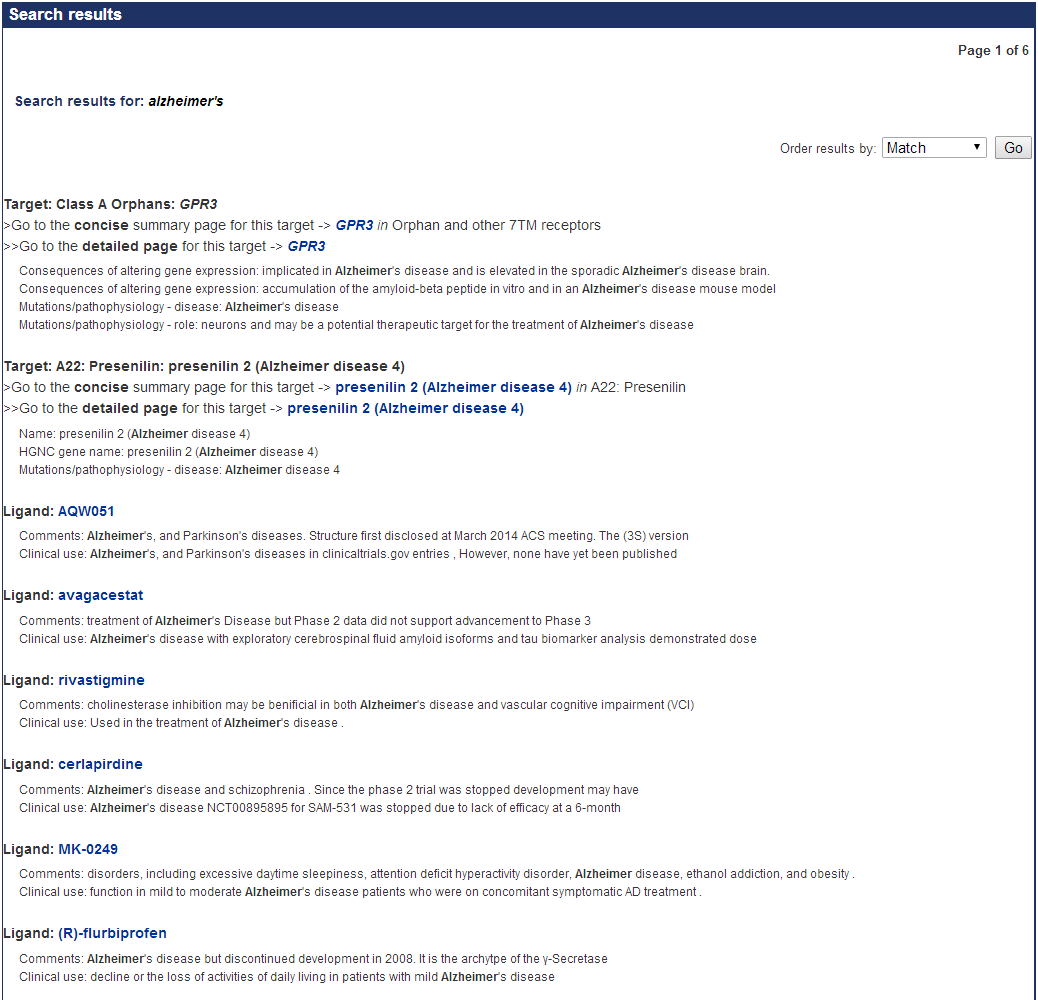
One of our curators, Chris Southan, has completed work on a case study for the curation of drugs and targets involved in Alzheimer’s disease. This project has seen the addition of new approved drugs, compounds in clinical trials and research compounds to the database, all with their pharmacology curated from the literature. The ‘biological activity’ tables and comments for these ligand pages now include patent data in cases where there are SAR data for compounds or analogues. Our database can also now be searched by disease name to retrieve ligand and target pages. Here’s an example of a search using the term ‘Alzheimer’s’:

Results page from using ‘Alzheimer’s’ as a search term

Updates to other content 

Our latest database update also saw new information added to several of our existing target pages:

  • Updated GPCR target pages: bombesin, bile acid, angiotensin, LPA & S1P family pages
  • Updated introduction for formylpeptide receptors
  • Updated content on the voltage-gated calcium channel subunits Cav1.1-1.4 & introduction
  • Cross-links added between GPCRDB and GtoPdb, and the UniProt and HGNC databases now link to GtoPdb.

The database now includes 2655 protein entries and 6653 ligands.

New features

The IUPHAR/BPS Guide to PHARMACOLOGY web portal now incorporates all content from the original IUPHAR Database site including the hot topics and recent pairings pages. The http://www.iuphar-db.org address will be retired over the coming years so be sure to update your bookmarks to the new site.

New file formats have been added to the download page, and complete download files of the database content are now available.

We have also recently set up a Slideshare account.

We are continuing to add approved drugs, clinical candidates and new targets to the site and our next update will be due in the summer, so watch this space and our social media for news of the next release, or sign up for email alerts using the form on our homepage.

Tagged with: , ,
Posted in Database updates, Drug targets

WCP 2014: 17th World Congress of Basic and Clinical Pharmacology in Cape Town

 Image

We recommend that all our users consider attending WCP2014 (early bird registration has now been extended until March 31st). Members of the IUPHAR/BPS Guide to PHARMACOLOGY database team, and NC-IUPHAR committee members will be attending and look forward to meeting you there. A number of presentations by NC-IUPHAR committee and subcommittee members are scheduled, outlined below:

Plenary lectures

  • Arthur Christopoulos-IUPHAR Analytical Pharmacology lecture- Adventures in Allostery: From structure to function
  • Yoshikatsu Kanai – Amino acid transporters in oncology
  • Simon Maxwell – Challenges in training tomorrow’s prescribers
  • Kozo Kaibuchi – Protein Phosphorylation in Signal transduction
  • Richard Neubig – Signal transduction in therapeutics
  • Doriano Fabbro – Tyrosine kinase inhibitors
  • Martin Michel – Autonomic pharmacology of the urogenital tract

Symposia including NC-IUPHAR affiliates

  • Orphan G protein-coupled receptors- What are the new ligand and new drug targets? (Anthony Davenport, Janet Maguire, Stephen Alexander, Adam Pawson)
  • Structural Basis for Ion Channel Pharmacology (including Bill Catterall)
  • NC-IUPHAR and the IUPHAR/BPS Guide to PHARMACOLOGY (Sir Colin Dollery, Michael Spedding, Simon Maxwell, Adam Pawson, Chris Southan)
  • Update in geriatric pharmacology Optimal Prescribing in Older Patients: The challenge of Multiple Comorbid Conditions and Polypharmacy (including Darrell Abernethy)
  • Evolution, sport and modern diseases (including Michael Spedding)
  • Emerging Drug Targets (including Richard Neubig)
  • Glucocorticoids: new insights into mechanisms of action (including John Cidlowski)
  • Epigenetic mechanisms in cell- and drug-based heart failure therapies (including Lutz Hein)

Full details for the meeting and a detailed schedule can be found on the event website. Click on the following links for flyers outlining event speakers, focused target sessions and symposia and events in and around Cape Town.

Posted in Events

Chemical search drawing tools: updating Java and security exceptions

Regular users of the Guide to PHARMACOLOGY will be aware that the site includes a ‘Chemical structure search’ function whereby users can draw chemical structures or parts of structures and use these to search against the database. Users can also paste in a non-isomeric SMILES string copied from another database and use this to search. The chemical drawing function is provided by the Marvin Sketch Java applet from ChemAxon.

In order to use this tool, a recent version of Java is required, and users may find they are prompted to update Java when attempting to access pages running Java applets. However, we have found that the latest version of Java (Version 7 Update 51) on Windows fails to run certain applets, including our chemical drawing tool, owing to enhanced security restrictions. In order to overcome these restrictions you need to add our website address to the Exception Site List for the version of Java your browser is running.

Instructions for how to add site exceptions can be found at this page, under the section “Adding a site to the Exception Site List”. Note that you should add both forms of the website address (http://www.guidetopharmacology.org/ and http://guidetopharmacology.org/).

Other websites we use in our chemical curation work including Scifinder, OSRA and Chemicalize.org also run chemical drawing applets requiring Java therefore users may also wish to add security exceptions for these sites.

Feel free to contact us if you have any questions about the above. We expect in the future to be able to offer a JavaScript version of MarvinSketch which will bypass the Java requirement and should also run on tablet or mobile devices.

contributed by Joanna Sharman and Helen Benson

Posted in Technical

Drug and target lists on the Guide to PHARMACOLOGY

Given the intense interest in drugs and their human targets, both in pharmacology and chemical biology, obtaining a simple list of either is surprisingly difficult. There are many reasons for this. One of them is that those lists that can be obtained vary in which names, synonyms or identifiers are used both on the drug side for the specification of chemical structures and on the target side for the gene/protein. An example of the former is that the INN may be assigned to the parent structure for the approved drug name (e.g. atorvastatin CID 60823), whereas the USAN specifies the salt form (atorvastatin calcium CID 11227182), while the official label for the medication specifies atorvastatin hemi-calcium trihydrate (CID 656846). The target of atorvastatin can be variously designated as Entrez Gene 3156, UniProt P04035, HMGCR or NP_000850. A second reason that makes the exercise challenging are the different “rules” by which any list is populated, either as a published collation or a selectable subset of any particular database. This produces various types of inter-list discordance. Consequently, no independently produced lists agree 100% on either precisely which chemical structures are represented or how these are “mapped” (in the molecular mechanism of action sense) to protein identifiers.

In the course of expanding and enhancing our own database, we have assessed a substantial number of such lists. While we much appreciated their availability, digging these out was non-trivial and we also had to tackle the task of normalising their entity content. This is necessary for comparative analysis and to understand the basis for their overlaps and differences (as described recently in this paper). Given the effort and expertise needed to prepare these lists, we decided to share them with our user community. You can see the result on this page. As ever, feedback is welcome.

contributed by Chris Southan

Tagged with: , ,
Posted in Drug targets